From Queen's College Lagos to NASA. She Is Making Sure Every Flight You Take Is Safer
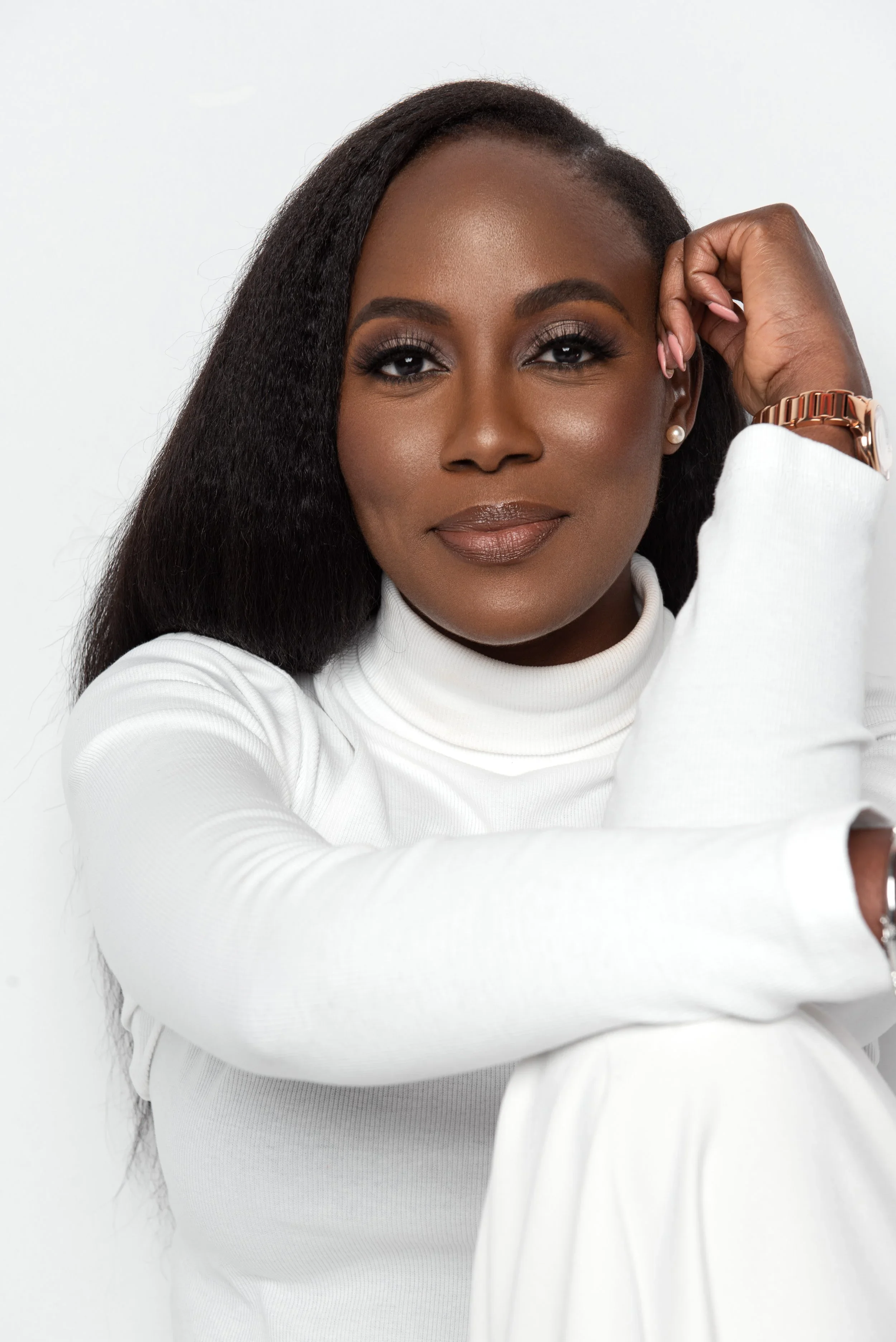
Her mother decided she was going to be an engineer before she knew what an engineer was. This is not a metaphor. This is what happened. Before Wendy Okolo had language for what she wanted to become, her mother had already named it.
"School was easy for me," she has said. "I got A's all through. But my mom said I was going to become an engineer even before I knew what it was."
She grew up at St Mary's Primary School and then Queen's College, one of Nigeria's most respected all-girls secondary schools, a place that has shaped some of the sharpest women the continent has produced. While she was there, learning what she was made of, her sisters were teaching her something school did not cover: science as it actually lives. Through their daily realities. Through observation and problem-solving and the way things worked in their home and their neighbourhood.
She calls her sisters her heroes. Not her professors. Not her mentors at NASA. Her sisters.
She did not decide which kind of engineer to become until she arrived in Texas for her first semester. Then aerospace found her, or she found it.
"I didn't decide what engineering to specialise in right before I started my first semester," she has said, "but later on, aerospace was what I fell in love with because it was fascinating."
That is an understatement of considerable scale.
At the University of Texas at Arlington, she became president of the Society of Women Engineers while simultaneously excelling in a field where women, and particularly Black women, were almost entirely absent from the record books. She interned at Lockheed Martin as an undergraduate, working on NASA's Orion spacecraft. She was not an observer or a support function. She was working on a spacecraft.
In 2015, at twenty-six years old, Dr Wendy Okolo became the first Black woman in history to earn a PhD in aerospace engineering from the University of Texas at Arlington.
The first. Not the first Nigerian. Not the first in her generation. The first.
Her doctoral research focused on aircraft formation flight-specifically, how planes flying in formation, like birds, can use each other's wake to reduce fuel consumption significantly. The work was not theoretical for long. The United States Air Force took her findings and validated them through actual flight tests. Real aircraft. Real fuel savings. Real world.
Her graduate studies had been funded by the US Department of Defense through the National Defense Science and Engineering Graduate Fellowship, by Zonta International through the Amelia Earhart Fellowship, named after aviation's most famous pioneer by the American Institute of Aeronautics and Astronautics, and by the Texas Space Grant Consortium. The field was paying attention.
NASA's Ames Research Center sits in Silicon Valley, the same geography as the technology companies that define the modern economy, and yet doing something they mostly do not: figuring out how to make things that fly in the sky and travel through space do so more safely, more intelligently, and more efficiently.
This is where Wendy Okolo works.
At NASA Ames, she is a researcher and Associate Project Manager in the Intelligent Systems Division, conducting research on aerospace vehicle controls and systems health monitoring. She was the controls lead on a NASA early career team that won $2.5 million to develop innovative techniques to guide and control an unconventional spacecraft. She holds a US patent in aerospace vehicle flight path control.
Every time you board a commercial flight, the science she works on is somewhere in the story of that flight. Not adjacent to it. Inside it.
She was honoured with the NASA Exceptional Technology Achievement Medal, the NASA Ames Award for Researcher and Scientist, and the NASA Ames Early Career Researcher Award, becoming the first woman ever to receive that last one. The Black Engineer of the Year Award named her the Most Promising Engineer in the US Government. She was named among the Most Influential People of African Descent by the United Nations. The US Embassy in Nigeria celebrated her achievements in February 2026.
But she did not stop at the work itself.
When she became the Special Emphasis Programs Manager for Women at NASA Ames, she looked at the institution around her and did what people who have been made to feel out of place always do when they get to the inside: she started removing the reasons others would feel out of place too.
She created nursing rooms for mothers returning to work at NASA. She analysed the language in job descriptions across the institution to identify and remove gendered biases that were quietly narrowing the talent pool. She turned data into fairness — methodically, rigorously, in the same way she approached her engineering problems.
NASA honoured her for it with an Honour Award for her "foundational, data-driven commitment to fairness and inclusive excellence."
In 2023, she published a book: Learn to Fly: On Becoming a Rocket Scientist. It is the story she did not have access to when she was at Queen's College Lagos, trying to figure out what aerospace engineering was and whether it had space for someone who looked like her.
She wrote it so someone else would not have to figure it out alone.
There is a version of Wendy Okolo's story that is simply about excellence, about a girl from Lagos who arrived in Texas, outperformed every expectation, and made history. That version is true and it is extraordinary.
But the more complete version is about a woman who understood what her excellence was for. Who got to NASA and made room. Who got her patent and wrote the book. Who let her mother's certainty become her own, and then turned that certainty into something that would outlast any single career.
From Queen's College to the Intelligent Systems Division. From Lagos to Silicon Valley. From a mother's conviction to a patent held in her own name.
She is making aircraft safer. She is making the field wider. She is doing both at the same time.
The sky, she has proven, has always had room for her.