She Watched Girls Use Rags and Foam From Their Beds. Then She Built Something to Fix It.
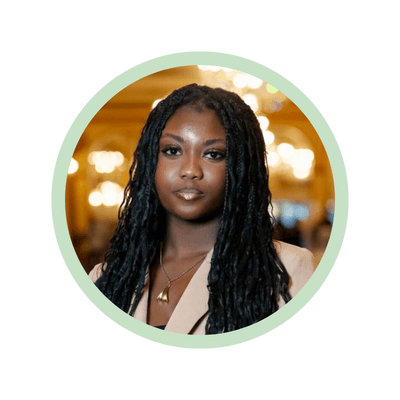
She was enrolled in school three years early because her mother believed in education with the kind of ferocity that does not negotiate. In those classrooms, Titilope Olotu watched things she was not supposed to see- girls using rags as menstrual products, tearing foam from their mattresses, hiding evidence of their bodies from a world that had decided this was something to be ashamed of.
"I was traumatized," she has said.
She was a child. She filed it away. She did not know yet that it was going to become the work of her life.
She came to America in 2015 at nine years old, a first-generation Nigerian immigrant landing in California with a mother who worked multiple jobs and a family navigating a new country under financial pressure that never fully lifted. She would eventually spend her high school years working more than forty-two hours a week to help support them, while maintaining the grades of a salutatorian in an International Baccalaureate programme.
The body keeps its own records.
Her first period came in America. She was in PE class at a California middle school when it happened. She bled through her clothes. She was assigned to a male teacher but would only accept help from the lone female gym teacher on staff. That teacher wrapped a hoodie around her waist, walked her quietly to a separate room, and the next day, the next day, created a personalised menstrual kit for her, with pamphlets that gently dismantled the stigmas she had carried from Nigeria.
That kit changed something.
"Menstruation is not something that was talked about a lot," she has said of her upbringing. "It was sort of like a stigma." She had arrived in America carrying the weight of that silence. One teacher, one kit, one act of care and suddenly she could see a different way.
She thought about all the girls she had left behind.
In October 2023, Titilope founded Period PADÍ-padi meaning friend in Nigerian Pidgin. She was seventeen years old. She began by doing what she always does: research, late-night Zoom calls across time zones, building relationships with on-the-ground collaborators in Lagos and Ibadan, sourcing pads at discounted rates, writing grants. She raised $12,350. She wrote a digital guidebook from the perspective of a big sister; the voice she had needed and never had.
On March 8, 2023 which was International Women's Day, her partner Mikun Adeselu visited Livingstone College in Nigeria, reaching ninety-three girls in a single day. At an orphanage home, the response was the same: smiles, surprise, and the words Thank you, Period Padi, spoken by girls who had not expected anyone to come.
Since then, PADÍ has reached over 14,700 students across the United States, Nigeria, and India. More than 2,570 kits distributed. Dozens of workshops held. Wellness booths set up in school quads spaces she calls WellNests, where girls can pick up menstrual products, access mental health resources, talk to someone.
Her work earned recognition from Vice President Kamala Harris. She received the Diana Award, named after Princess Diana and given to young people doing extraordinary humanitarian work. The White House noticed. Prince Harry spoke at the ceremony where she was honoured.
She was eighteen.
But she did not stop at distribution.
In summer 2024, Titilope noticed women online reporting that a major period-care brand was causing increased cramping and heavier bleeding. She started investigating. She began sourcing banana fibre pads, chemical-free, biodegradable, sustainable and working with UCLA's BioPACIFIC Materials Innovation Platform to study how banana plants cultivated in Nigeria could produce fibres good enough for medicinal-grade menstrual products.
Then she went further.
She is developing the PADÍ Eco-Kit: a biodegradable pad made from banana fibre, infused with herbal healing agents, embedded with a bio-sensing layer that can detect over ten biomarkers from menstrual fluid, iron levels, hormone imbalances, infection markers. After use, a woman scans the pad with an app and receives personalised health insights. She is seeking FDA approval. She wants to open OB/GYN clinics in Nigeria and Somalia. She is nineteen years old and in her first year at UCLA on a full scholarship, studying biology and public health.
She has mentored over 453 students. She has edited more than 620 scholarship and college applications, helping peers gain admission to universities that would otherwise have felt unreachable.
She has also been nominated as a 2025 Global Student Prize finalist, one of the most competitive student recognition programmes in the world.
Titilope Olotu grew up in a place where menstruation was something to hide, something that invited ridicule, something a girl managed alone with whatever she could find. She came to a country that was better imperfectly, unevenly better and instead of simply being grateful for the difference, she decided to close it.
She is not waiting to graduate. She is not waiting to be established. She is not waiting for anyone's permission.
She saw what was missing. She built the thing that was missing. She is still building it, at nineteen, from a dormitory at UCLA, across three continents, with a vision large enough to include FDA approval, Nigerian clinics, and a banana farm.
Padi means friend in Nigerian Pidgin.
She is being one, to thousands of girls who never asked for her, never expected her, and will never forget that she came.