Roger Milla: The 38-Year-Old Who Danced Into World Cup History
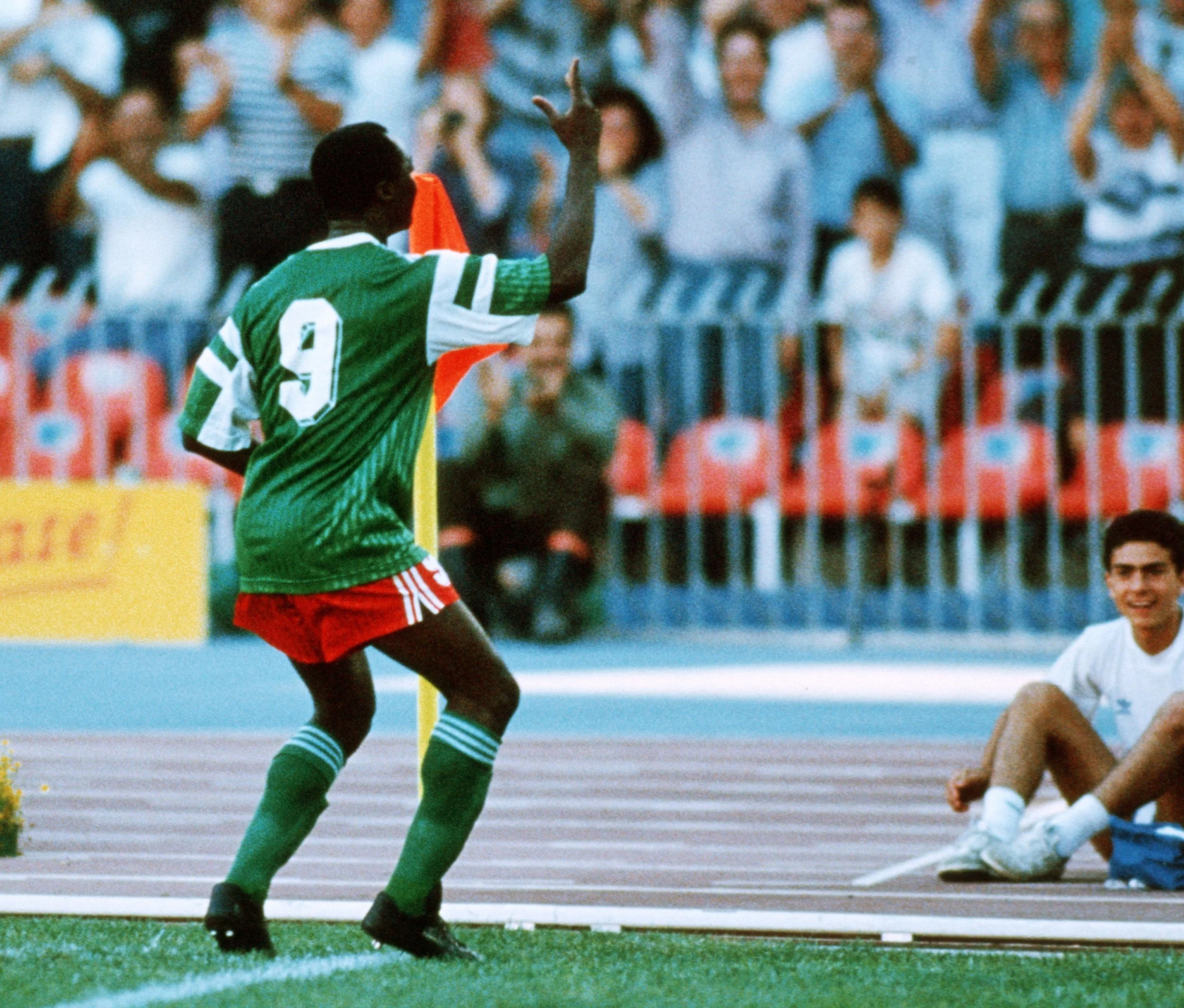
My grandfather used to regale me with stories about the 1990 World Cup. I do not know what that tournament did to that generation, but whenever football comes up, their eyes light up. They remember the goals, the drama, the upsets, and almost always, one name finds its way into the conversation:
Roger Milla.
The 1990 FIFA World Cup was held in Italy. Four years earlier, Argentina had lifted the trophy in Mexico, a campaign forever tied to Diego Maradona and the now-famous “Hand of God.”
When Cameroon found themselves drawn in the same group as Argentina, some pundits reportedly joked that it was a contest between African magic and the Hand of God. My grandfather has a way he would describe the match up in Kikuyu language!
Nobody gave Cameroon a chance.
The team arrived in Italy carrying a burden familiar to African sports fans: disputes over player allowances and bonuses. Many of the players came from lower divisions in France and leagues the wider football world barely paid attention to.
Expectations were low. After all, Cameroon had never won a single World Cup match.
Then there was Roger Milla.
At 38 years old, he had already retired and was living on the island of Reunion in the Indian Ocean. He had not even been part of Cameroon’s Africa Cup of Nations squad earlier that year. Yet just weeks before the tournament, he was called back, not by a club, not by a coach, but reportedly at the personal request of President Paul Biya.
Years later, Milla would explain his decision simply:
“I returned to the national team because I felt the recall of the people.”
Milla could no longer play a full 90 minutes. But what he had lost in speed, he made up for in instinct, intelligence, and an almost supernatural understanding of the game.
Every time he touched the ball, something seemed to happen.
And perhaps African magic really did defeat the Hand of God.
Cameroon stunned the world by beating defending champions Argentina 1-0 in one of the greatest upsets in World Cup history.
Against Romania in the second match, Milla came off the bench and scored twice in ten minutes, sending Cameroon through to the knockout rounds.
Then came Colombia in the Round of 16.
The tension of an entire continent seemed to rest on his shoulders.
If you watch the footage today, it still feels unreal. Milla glides past defenders to score the opening goal. Then, moments later, comes one of the most iconic scenes in football history.
Colombia’s eccentric goalkeeper, Rene Higuita, had wandered far from his goal line, dribbling the ball as if he were a midfielder. Milla saw his chance. He pounced, stole the ball near midfield, and calmly rolled it into the empty net.
No panic.
No rush.
It was the composure of a man who had seen everything football could throw at him.
That goal remains one of the most unforgettable moments ever witnessed at a World Cup.
But you cannot the corner flag.
Every time Milla scored, he ran to it and danced.
Hips rolling, shoulders swaying, arms outstretched.
Pure, unapologetic African joy broadcast to hundreds of millions of people around the world, many of whom had never given a second thought to Cameroon.
The celebrations became a global sensation and remain among the most recognizable images in World Cup history.
Led by Milla, Cameroon became the first African nation ever to reach the quarterfinals of a FIFA World Cup.
A reporter for The Times of London once described him this way:
“He is one of the most remarkable stories in the history of the World Cup.”
Yet Roger Milla was not finished.
Four years later, at the age of 42, he returned for the 1994 World Cup in the United States. Against Russia, he scored again, becoming the oldest player ever to score at a FIFA World Cup( a record he set by breaking his own.
The honors followed.
FIFA included him among its list of the 125 greatest living footballers. The Confederation of African Football named him one of Africa’s greatest players of all time. He was twice crowned African Footballer of the Year.
And perhaps that is why Roger Milla never really left us.
Listen carefully to enough Lingala or Ndombolo songs and eventually you will hear his name.
“Roger Milla!”
It usually comes at the climax of the song, the moment when sitting down is no longer an option. The moment your hands find your hips, your shoulders loosen, and your feet begin moving on their own.
The musicians know what they are doing.
They are not just shouting out a footballer.
They are invoking a feeling.
A reminder of a time when an aging striker from Cameroon walked onto the biggest stage in sport and made an entire continent believe.
May the day break