The Doctor Who Went to Fix the Pipes
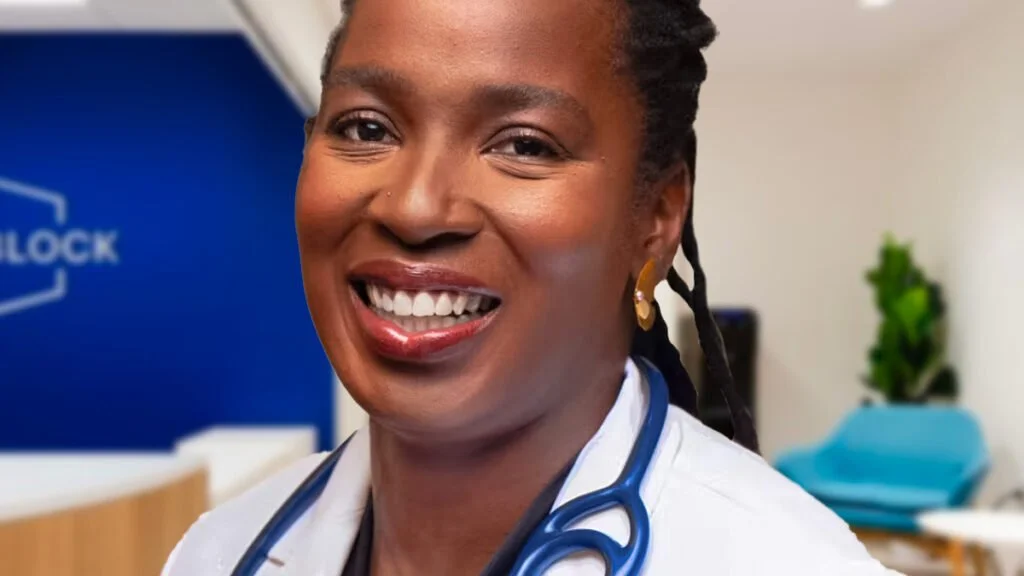
Most people, when they leave home, are moving toward something better. Toyin Ajayi kept moving toward something harder. The daughter of a Nigerian physician who raised her in Kenya, she watched the AIDS epidemic take people who looked exactly like her while the world debated whether saving them was cost-effective. She went to Stanford anyway. Cambridge. King's College London. And then, fresh out of medical school, instead of a hospital in London or New York, she chose Freetown — a country of seven million people and fifty doctors.
She is now the co-founder and CEO of a healthcare company valued at close to six billion dollars. She built it for the same people she has always built for. The ones nobody else was going to.
She grew up in Nairobi, the daughter of two Nigerian parents who believed that knowing your luck was the first moral obligation. Her father was a physician. He took her to his hospital. She watched him work through the beginning of the AIDS epidemic, watching neighbors and strangers die of something the rest of the world was arguing about treating. Her parents put words to what she was seeing. Her father told her: you're just lucky you happened to be born here, to us, and to parents who are master's educated and can send you to school.
He didn't say it to shame her. He said it so she'd know what to do with it.
She was a teenager when she saw a news segment debating whether it was cost-effective to send antiretroviral treatments to people in Africa. She still remembers how it felt. "I just remember feeling so angered and indignant and determined," she has said, "that that was not the way that we as a society should think about the allocation of resources." That anger didn't break her. It built her. Her parents had given her just enough of the right framework to turn rage into something useful.
The fire stayed.
She went to Stanford. Then Cambridge. Then King's College London for medicine. And then, in 2008, fresh out of medical school, she went to Freetown.
Sierra Leone had seven million people and fifty doctors. The hospital she went to serve had broken infrastructure, broken trust, and families who refused to bring their sick children through its doors. The pipes were broken. No running water. Before she could do anything that looked like medicine, she had to learn how to fix the plumbing.
She drew a map by hand. She found the break. She fixed it.
Then she tried to understand why the families stayed away.
What she found wasn't confusion. It was a reasonable decision. The health workers had "never bothered to explain" how the system worked. They had built a building and expected people to come. Nobody had gone to the people. Nobody had earned the right to be trusted. "In health care," she would say years later, "it is not enough to build it and expect people to come. You have to go to them."
She spent years in Sierra Leone. She ran campaigns during the HIV epidemic. She built a nonprofit. She trained people. And then she came back to America.
Boston was different. Massachusetts had built near-universal health coverage. The infrastructure was there. The machines were sophisticated. The hospitals were full of people who had spent decades studying how to keep other people alive.
And still, she would come into the clinic in the morning and find that the person she'd been worried about hadn't shown up. She would spend the rest of the afternoon wondering- are they okay? Are they in the ER? Are they ever coming back? Or they would show up, and she would be late for everything else because she had spent an hour trying to scratch the surface of what was actually happening in that person's life.
She has described it plainly: "You are almost set up to fail for that person."
That is not a clinical observation. That is an indictment.
The American healthcare system spends more per person than any other developed country in the world. It has some of the worst outcomes. The people driving fifty to sixty percent of total medical spending: the ten percent of the population with the most complex needs, the chronic conditions, the mental health crises, the poverty; are the same people the system has the least infrastructure to actually serve. They end up in emergency rooms. They disappear between appointments. They are managed, not cared for.
Toyin Ajayi watched this happen every day in Boston. She had already seen it in Freetown. The scale was different. The mechanism was the same: a system that expected people to come to it, rather than earning the right to be trusted.
In 2017, she co-founded Cityblock Health. The premise was straightforward and radical at the same time: build a healthcare company specifically designed for Medicaid patients, meet them where they live, integrate primary care with behavioral health with social needs, and measure success by what actually gets better in people's lives, not what gets billed.
There were questions. There are always questions about Medicaid. Can you make a market there? Can you scale profitably? Can you build something serious for people the system has always treated as an afterthought?
She has answered all of them. Cityblock booked over a billion dollars in revenue in 2023. It now serves more than 100,000 members across more than ten states. Over eighty percent of those members have two or more chronic health conditions. The majority are people of color.
The company works because it does what nobody else built the infrastructure to do. It goes to people. Community health workers conduct in-home assessments. Care is delivered where members live. The technology integrates health records with social needs data: not to flag problems, but to understand full lives. Members are not patients to be managed. They are, as Ajayi has insisted, people who want health, who want wealth, who want to walk their daughter down the aisle.
The goal is not an A1C number. The goal is December.
Dr. Ajayi is still a practicing physician. This is worth saying. She runs a company valued near six billion dollars, sits on multiple boards, has been named to TIME100 Next, Entrepreneur's 100 Women of Impact, and the National Academy of Medicine. And she still sees patients. Not as a symbol. As a practice. Because she understood early that a doctor who stops seeing patients stops knowing what medicine actually feels like.
The way she describes her job now is not so different from the way she described fixing pipes in Freetown. The root problem is always trust. The root solution is always: go to them.
"Medicine for so long kind of operated on a hierarchy," she has said. "It was us and it was them. We had the white coats and all the data and the years of training, and they were our subject. That doesn't work."
What works, she believes, is what she tells her own patients. I am an expert in these things. You are an expert in you. You are an expert in what it feels like to be you every day. You bring your expertise and I bring mine. And mine is by no means more important than yours.
That is not a radical idea. It is, somehow, still a radical practice.
She grew up watching her father follow patients into their difficulty. She watched the AIDS epidemic take people who looked like her while the world debated the cost of saving them. She drew a map of broken pipes in West Africa. She came back to Boston and watched a sophisticated system fail the same people in a different zip code.
Every step built toward the same conviction: that the people the system treats as the most expensive problem are, in fact, the clearest signal of what the system has refused to become.
Cityblock is her answer to that refusal. It is not finished. She would be the first to say so. There are still a hundred thousand people. There are still states where the care does not reach. There are still mornings when someone doesn't show up and a doctor spends the rest of the day wondering.
But there are also December weddings.
May the day break!