The Mountains You Carry
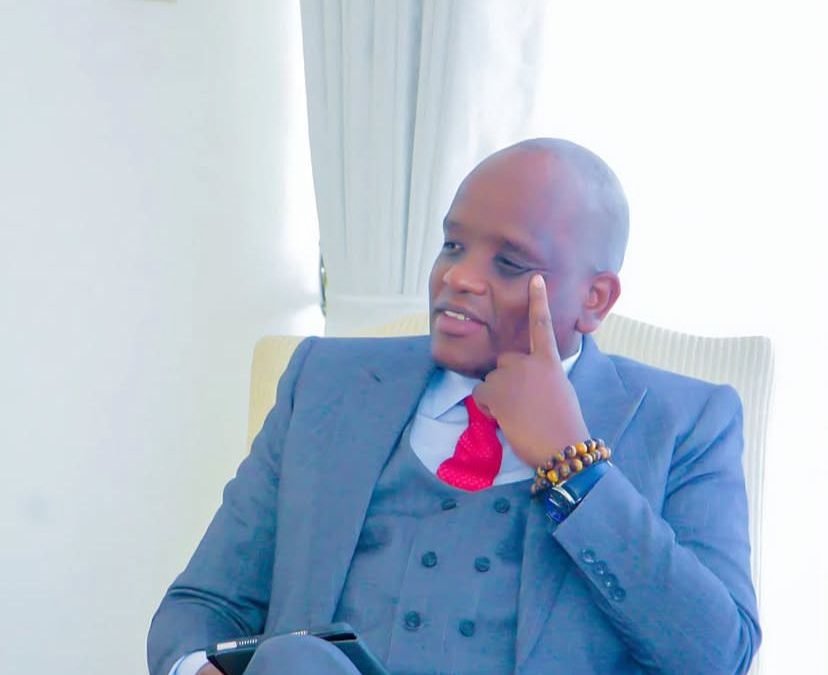
My name is Dennis Itumbi.
Sometimes I sit back and watch young people in this country, and I find myself smiling, not because everything is working, but because of how restless they are.
There is an energy in this generation that is difficult to explain if you are not paying attention closely. On the surface, it can look like anger. It can sound like complaints. It can even feel disruptive. But if you stay with it long enough, if you listen beyond the noise, you begin to notice something else entirely.
There is refusal.
A refusal to accept that things must remain as they are. A refusal to inherit systems and simply manage them. A refusal to wait quietly for change that never seems to arrive.
And I understand that feeling more than people might think.
Because there was a time when many of us were also pushing against walls that did not move easily. The only difference is that this generation is not asking for permission. They are building, coding, creating, and questioning all at once. They are impatient, yes — but that impatience is not weakness. It is clarity.
They want results yesterday.
And I find myself asking… what happens when institutions built for a slower world are suddenly confronted by a generation that moves this fast?
That question keeps me awake sometimes.
When I think about places like America or Europe, I don’t just think about wealth or infrastructure. Those are the obvious things. What interests me more is something less visible, something they have refined over time with almost surgical precision.
They understand how to tell their story.
Not just to themselves, but to the world.
If you think about it carefully, much of what we know about those places is not from policy papers or government reports. It comes from film, from music, from sports, from moments that are packaged and shared in ways that travel far beyond their borders.
They built institutions, yes.
But they also built imagination.
And for a long time, I think Africa underestimated how powerful that second part is. We focused on governance, on structure, on policy. All important things, but we did not invest enough in how we present ourselves, how we shape perception, how we allow the world to see us through our own lens.
Narrative is not a small thing.
Narrative is power.
I have seen it shift conversations in minutes. I have seen it build or destroy credibility almost overnight. And I have also seen how, over time, truth quietly reclaims its place, but only if you are patient enough to keep building it.
I was born and raised in rural Kenya, and when I think about those years, what comes back to me is not hardship first. It is people.
It is the way life was shared.
You did not grow up in isolation. You grew up being seen, sometimes too much. Every adult felt responsible for your direction. Every mistake was corrected not just by your parents, but by the village.
At the time, it felt intrusive.
Now, I understand it differently.
It was a system of accountability.
We built houses together. Not metaphorically-physically. Mud houses that required hands, time, coordination. When land needed to be tilled, people came. When there was a celebration, people gathered. Even during Christmas, we would sit and watch plays performed by people we knew, stories acted out in front of us.
I remember eventually stepping into those plays myself.
Standing there, performing, feeling the weight of being watched.
Maybe that is where I first understood something about storytelling… that it is not just about what you say, but how people feel while they are watching you say it.
My early work in media and digital communication forced me to confront a truth that is uncomfortable, but necessary.
Information moves faster than truth.
You can put something out into the world, and within minutes it has reached places you have never been. It can shape opinions, create reactions, spark outrage before anyone has time to ask whether it is accurate.
And in those moments, you are tempted to chase speed. To respond immediately. To correct everything, to engage every voice, to defend every position.
But over time, I learned something that changed me. Truth does not compete on speed. It competes on consistency. At the same time, credibility is not built in moments. It is built in patterns. In the quiet repetition of doing the right thing, saying what is accurate, even when it is less exciting, less viral, less rewarding in the short term.
You know, there were times I was misunderstood. Times people reduced complex work into simple narratives that were easier to criticize.
Times I wanted to respond to everything.
But you cannot live like that.
You exhaust yourself.
And worse, you lose focus on what actually matters.
Now now now…If I could go back and speak to my younger self, I would not tell him to avoid mistakes.
I would tell him to be comfortable being misunderstood.
Because if you are trying something new-especially in spaces like technology, communication, or governance- you will be misunderstood.
People will question what they do not recognize.
They will resist what feels unfamiliar.
And if you are not careful, you will start adjusting yourself to fit their expectations instead of pushing forward with what you know could work.
I have had moments where I chose to continue anyway.
Not because I was certain. But because I was willing to try. And every time I did, something shifted.
Not always immediately. But eventually.
There are values that anchor me, especially in moments where everything feels like it is moving too fast:
Truth, because without it, everything else collapses.
Service, because public life cannot be about personal visibility. It must be about impact, about whether what you are doing improves someone else’s life in a tangible way.
And curiosity… because the world we are in now does not reward those who stay still.
Technology is changing. Communication is changing. Even the way we understand influence is changing. If you stop learning, you fall behind.
I make it a habit to read outside my comfort zone every week. Not because it is easy. But because it forces me to think differently.
And then there are the rocks.
The things you carry without realizing how heavy they have become.
For me, the biggest one has been the instinct to respond. To every criticism. Every misunderstanding. Every narrative that feels incomplete or unfair.
At some point, you realize that not every battle deserves your energy. Not every voice requires your reply.
Sometimes the most powerful thing you can do is continue building… quietly. Let time do its work. Let consistency speak.
There is a line from a poem that has stayed with me for years.
“The mountains that you carry, you were only meant to climb.”
I think about that often.
Because it is easy to believe that the weight you feel is something you must hold onto.
But it isn’t. You climb it. You learn from it.
And then you let it go.
May the day break!