The Rise And Fall of Hillsong Church. What Really Happened?
Almost everyone has heard a Hillsong song at some point.
You may not know the name, but you know the feeling. Their music has found people in quiet moments, in heartbreak, in prayer, in those Sundays when you are just trying to hold yourself together. For many, those songs became part of their spiritual memory.
But behind that global sound, there was another story unfolding, one that never made it into the lyrics.
This is the story of power, influence, and eventually, scandal that rocked arguably one of the most influential churches in modern history.
This is the story of Hillsong.
In 1983, a young couple from New Zealand, Brian and Bobbie Houston, started a church in a school hall in the western suburbs of Sydney. There were about thirty people in the room, and the church was called Hills Christian Life Centre. At the time, it was just another small Pentecostal congregation trying to find its footing.
What set them apart early was not size or structure, but intent. They were deliberate about making church feel accessible, especially to young people who felt disconnected from traditional services. The atmosphere mattered. The tone mattered. The experience mattered.
And then came the music.
Long before Hillsong became a global church brand, it became a global sound. Worship songs coming out of that small church began to travel far beyond Sydney. They were simple, emotional, and easy to adopt in other churches. One song in particular, “Shout to the Lord,” carried the name Hillsong across continents and into churches that had never heard of Hills Christian Life Centre.
At some point, the music became more recognizable than the church itself.
So the church followed the momentum. By the late 1990s, the name Hillsong had overtaken everything, and the organization formally rebranded as Hillsong Church. It was a rare case where the product defined the institution.
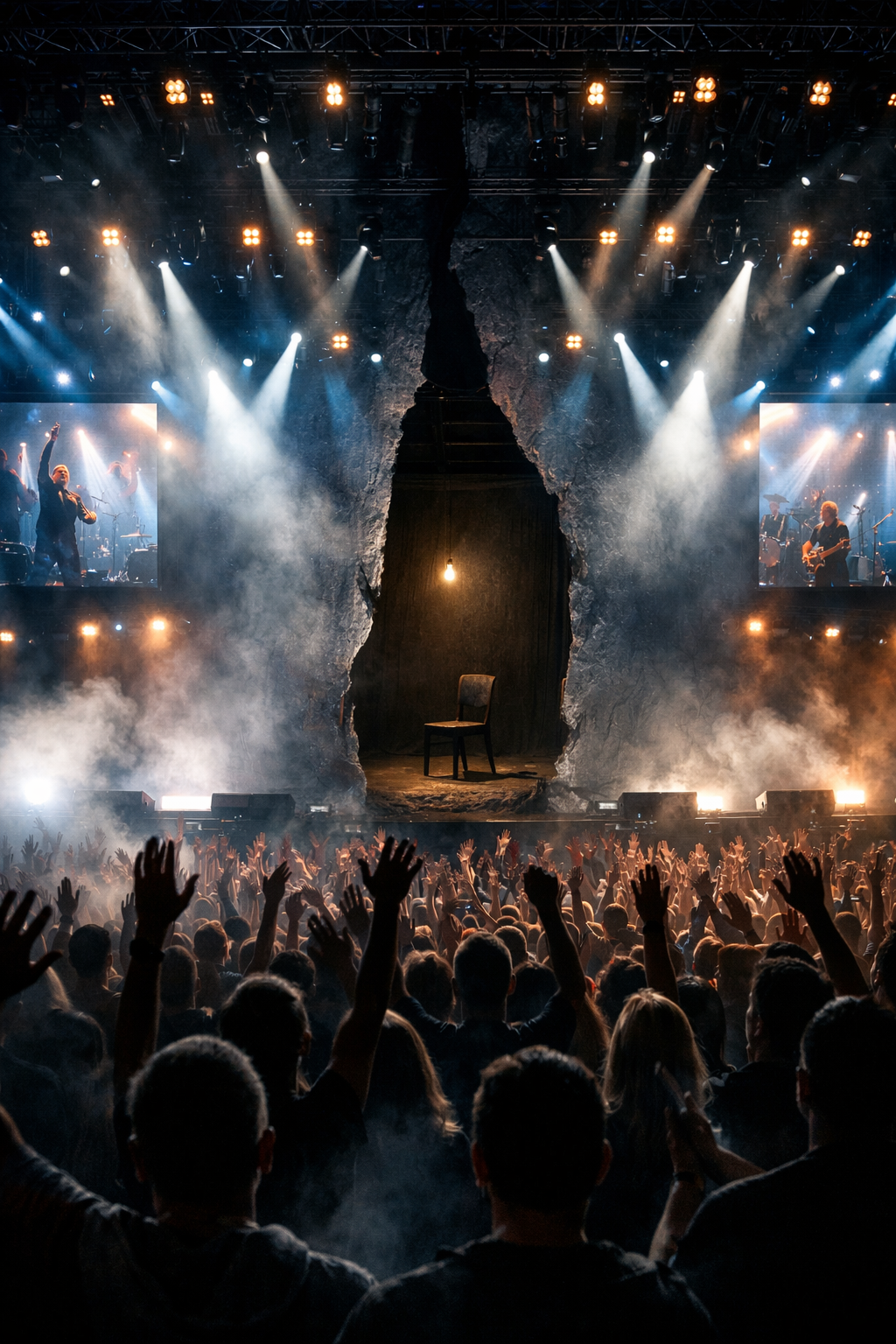
From there, growth was rapid and intentional. Hillsong leaned into presentation in a way most churches had not. Services were designed with high production in mind; professional sound, lighting, large screens, and a style that felt closer to a live concert than a traditional service. Pastors dressed casually, the music carried emotional weight, and the overall experience felt modern.
It worked.
The church expanded into major cities: London, New York, and eventually across multiple continents. Conferences filled arenas. The New York campus, in particular, drew attention because of its proximity to celebrity culture. Public figures like Justin Bieber and others began attending, and Hillsong became as much a cultural presence as it was a religious one.
Isitoshe,
At its peak, it had tens of thousands of weekly attendees across dozens of countries, and its music was being sung in churches worldwide, regardless of denomination.
From the outside, it looked like one of the most successful modern church movements in the world.
But that kind of growth often comes with pressure beneath the surface.
The first major public crack came in 2020 with Carl Lentz, the high-profile pastor of Hillsong New York. He was dismissed after it was revealed he had been involved in an extramarital affair. The story quickly expanded beyond the affair itself, with former staff and members describing a culture that included favoritism, blurred boundaries, and leadership issues.
What initially looked like an isolated failure started raising broader questions.
Those questions became heavier when attention turned to Brian Houston’s father, Frank Houston, who had been accused of abusing young boys decades earlier. It emerged that Brian Houston had known about at least one case but had not reported it to authorities. A national inquiry in Australia later criticized how the situation had been handled.
Then came further issues involving Brian Houston himself, including allegations of inappropriate behavior with women and internal investigations that ultimately led to his resignation in 2022.
By this point, the pattern was difficult to ignore.
Multiple pastors across different campuses resigned or were removed. Some churches within the network began distancing themselves. Financial practices and internal governance also came under scrutiny. What had once been seen as a tightly run global movement now looked, to many, like an organization struggling with accountability at the highest levels.
And that is where the Hillsong story becomes complicated.
Because the music genuinely impacted people. That part is not in dispute. There are individuals whose faith journeys are tied directly to those songs. But at the same time, the institution behind that music was dealing with serious failures that could not be explained away as isolated incidents.
Today, Hillsong still operates, but it does so under new leadership and with a very different level of public trust. The brand that once symbolized modern church success is now also a case study in how quickly influence can be undermined when leadership falters.
Hillsong’s rise was built on understanding people: how they connect, how they worship, and how they experience faith in a modern world.
Its fall, or at least its reckoning, came from something much older.
The inability of institutions to hold themselves accountable when power, image, and loyalty become intertwined.
May the day break