She Arrived in America With Almost Nothing. Then She Ran the Sixth Largest Company in the World.
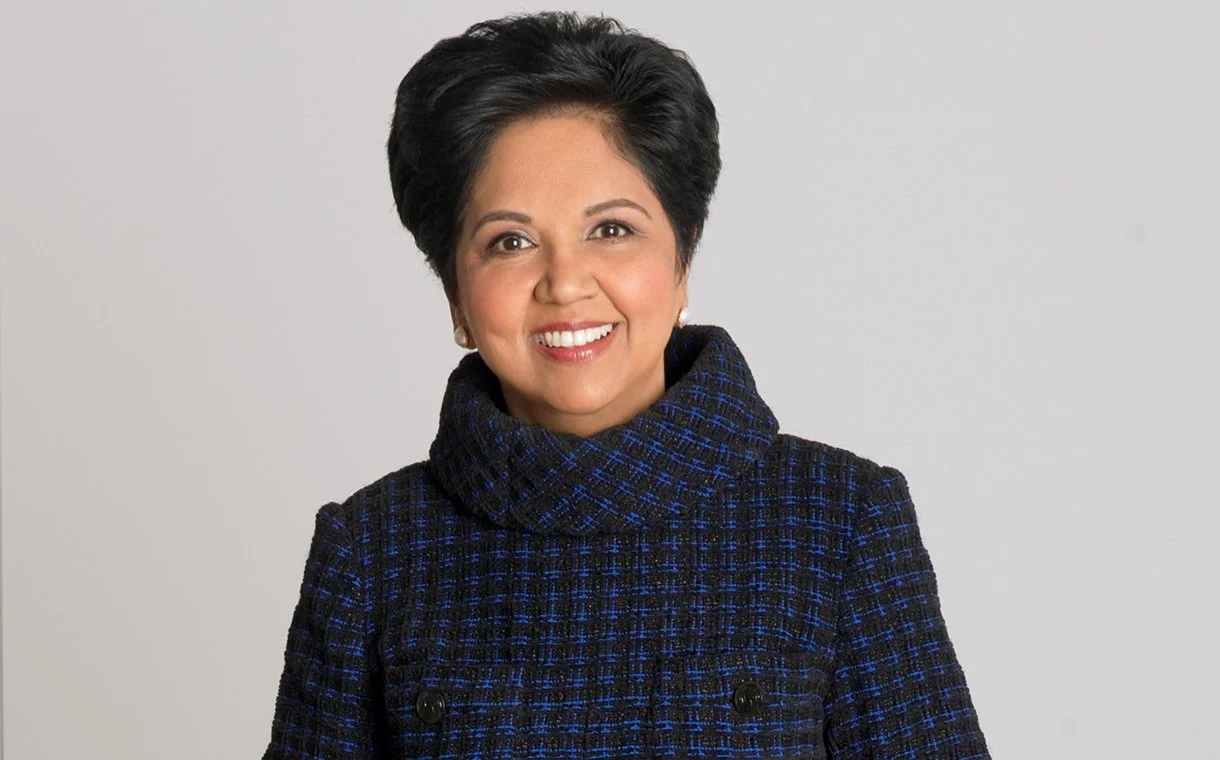
Every evening after dinner, Indra Nooyi's mother would ask the same question.
What do you want to be when you grow up?
She would ask both daughters -Indra and her sister -and they would have to come up with an answer. A president. A prime minister. A scientist. A leader of something. The best answer won a small reward. It sounds like a parlour game. It was actually an education. Indra was being trained, every night at the dinner table, to think about the future as something she could shape rather than something that would happen to her.
She graduated from Madras Christian College. She played guitar in an all-female rock band. She played cricket at a time when it was considered unseemly for Indian women to exert themselves. She did not care what was considered seemly. She was already building the version of herself she intended to become.
She read about Yale University in an article about India. She wanted a life in global business -something different from what was available to her in Chennai. In 1978, she applied. She got in.
She arrived in America at twenty-three years old with almost no money and no safety net.
If she failed, she failed.
She worked midnight to sunrise as a receptionist to pay her way through Yale.
When her first job interview came -her first real shot at the corporate world she had crossed an ocean to reach -she needed an outfit. She had $50. She scraped it together and bought a pair of western trousers. They reached only to her ankles. She went to the interview. She did not get the job.
She went back to her professor at Yale and told him what had happened.
He asked her a simple question: what would you wear in India for an important occasion?
A sari, she said.
Then wear a sari, he said. Be yourself.
She wore a sari to the next interview. She got the job. And from that day she made a decision she would never reverse -she would not hide who she was to make other people comfortable. She would attend board meetings in a sari. She would keep a statue of Lord Ganesha in her office. She would be Indra Nooyi -fully, unapologetically, in every room she walked into.
"I'm so secure in myself," she would later say, "that I don't have to be American to succeed in the corporate world."
She joined PepsiCo in 1994 as senior vice president of strategic planning. When she arrived, every one of the top fifteen positions in the company was held by a white American man. There were zero women CEOs in the Fortune 500. Zero.
She did not complain about this. She outworked everyone around her. She over-prepared. She over-delivered. She let the work speak before she did.
She led the sale of PepsiCo's restaurant division -Pizza Hut, KFC, Taco Bell -in 1997.
She orchestrated the $3.3 billion acquisition of Tropicana in 1998. She led the $14 billion merger with Quaker Oats in 2001, which brought Gatorade into the PepsiCo portfolio. Deal by deal, she became the most important strategic mind in the company.
In 2006, she became CEO.
The first woman of colour. The first immigrant. To lead a Fortune 50 company in American history.
There is a moment from that day that she has written about in her memoir.
She drove home from the office. She had just been told she was going to become President of one of the most powerful companies on earth. She was bursting to tell her family.
She walked through the door.
Her mother was standing in the kitchen.
Before Indra could say a word, her mother looked at her and said: we need milk. Go get milk from the store.
So she went. The new CEO of PepsiCo. She got in her car. She bought the milk. She came back.
Later, when she finally told her mother the news, her mother said something Indra has never forgotten: when you walk through that door, you are a wife and a mother first. The title stays at the office.
Indra has said this moment -the milk, the instruction, the reminder of who she was before any of it -shaped how she led. She understood something most powerful people never grasp: the job does not define you. You define the job.
She led PepsiCo for twelve years.
Revenue grew from $35 billion to $63.5 billion. Net profit more than doubled -from $2.7 billion to $6.5 billion. She transformed the product portfolio, moving PepsiCo toward healthier offerings under a strategy she called Performance with Purpose. She introduced paid parental leave for men and women. She rebuilt the labs in every school she had ever attended in India. She became the largest individual donor in the history of Yale School of Management -the first woman to endow a Chair at a top business school.
She stepped down in 2018. At a White House event during her tenure, both President Obama and Indian Prime Minister Manmohan Singh had claimed her as "one of us."
She belonged to both countries. She had been shaped by both. She had never pretended otherwise.
She arrived in America with $50, a pair of trousers that didn't fit, and a sari she had been told to hide.
She wore the sari.
The rest followed.