His Father Was Killed in Front of Him at 12. He Moved to America. Then He Bet Everything on One Idea.
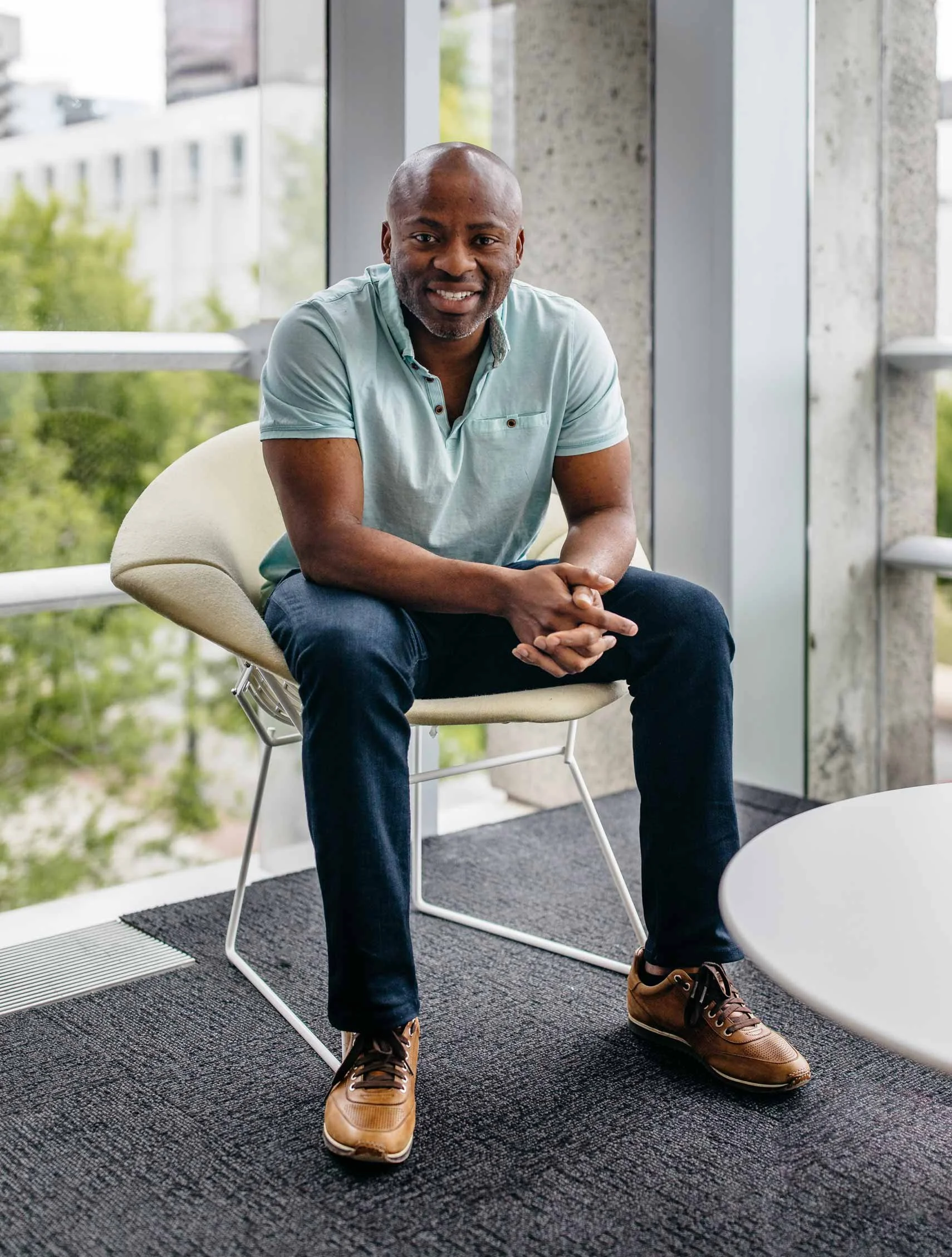
Tope Awotona was twelve years old the day his father was shot and killed in a carjacking.
His father was a microbiologist and entrepreneur - a man who built things, who worked with ideas, who had a plan for the life he was building. Then one afternoon in Lagos that life was over. And twelve-year-old Tope was left with something he has carried every day since.
"There was a part of me, from a very early age, that wanted to redeem him," he has said. "I felt like he didn't get a chance to complete his work."
Three years later, in 1996, his mother packed up the family and moved to Atlanta, Georgia. She had four boys and a grief she never quite set down. She got them out of Lagos and into America and trusted that the rest would follow.
Tope was fifteen when he arrived. He was good enough at school to graduate two years early and had earned a scholarship to university. His mother looked at the offer and said no. He was too young. He needed two more years to adjust, to settle, to become someone who could handle what was coming.
"It was super frustrating," he has said. "I felt like I was wasting time because I had my plan in place."
He waited. Then he went to the University of Georgia and studied computer science before switching to business and management information systems. He graduated and went into corporate software sales - IBM, Dell, Perceptive Software, EMC. He was good at it. Extroverted, sharp, relationship-driven. But he was restless.
He tried building his own things on the side. A dating website. A company selling projectors online. A company selling garden tools. All three failed. He has been clear about why: he was chasing profit, not solving a real problem. He was building for money rather than need.
Then one afternoon, as a salesman trying to arrange a meeting, he spent an hour sending emails back and forth just to find a time that worked for everyone.
He sat back and thought: this is absurd.
In 2013, at thirty-two years old, he cashed out his 401(k), emptied his savings account, and went into debt. He had roughly $200,000. He quit his job. He built Calendly - a tool that let you share a link and let someone pick a time, eliminating every back-and-forth email in between.
The idea was almost insultingly simple. That was the point.
He launched quietly from Atlanta Tech Village. No advertising. No press campaign. No Silicon Valley connections. He built the product carefully, made it work beautifully, and let people share it naturally. Every time someone sent a Calendly link, the person receiving it experienced the product firsthand and often signed up.
He bootstrapped it for eight years.
Eight years. While the rest of the startup world chased funding rounds and valuations and press coverage, Tope Awotona sat in Atlanta, building quietly, staying profitable, and owning almost all of it.
By 2021, Calendly had 10 million monthly users. It was embedded in 116 of the Fortune 500 companies. Revenue had passed $100 million and was doubling.
Then investors arrived.
He raised $350 million from OpenView and Iconiq Capital - not because he needed it, but because he had negotiated from a position of strength. He still owned the majority of the company. That majority stake was worth over $1.4 billion. Tope Awotona became one of only two Black tech billionaires in the United States.
He has used the money and the platform carefully. He and Calendly donated to Black Girls Code and My Brother's Keeper. When Russia invaded Ukraine in 2022, Calendly helped evacuate their Ukraine-based employees.
He appeared on the cover of Forbes.
And he has spoken often, publicly and without performance, about his father. The man who was killed in Lagos before he could finish what he was building. The man whose unfinished work became the fuel for everything his son did next.
Tope built what his father never got to complete.
He just did it from Atlanta, on $200,000, with a scheduling app and eight years of patience.
May the Day break!