The Man Who Built the Newsroom. Then Chose His Kids.
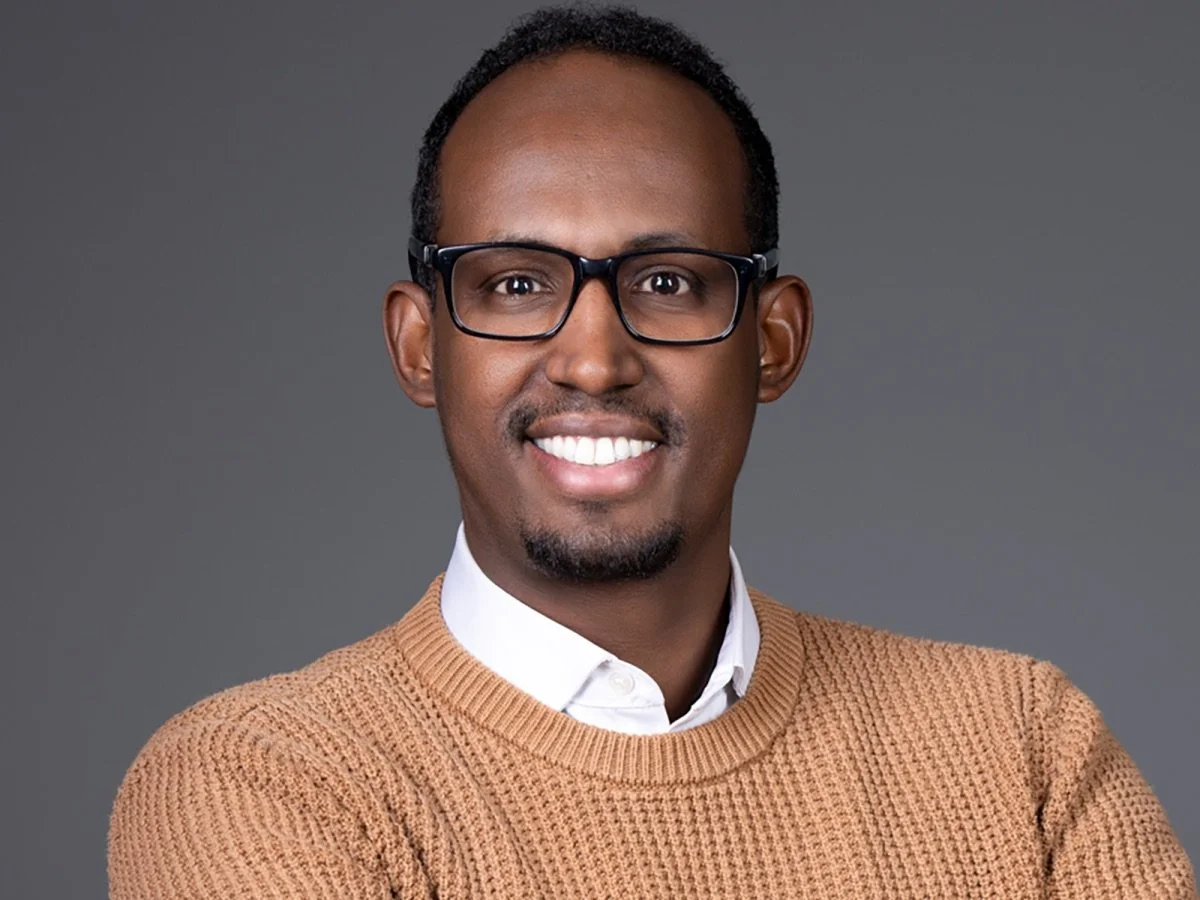
He was seventeen when he arrived in America from Somalia. He spoke little English. His family had been running since the civil war swallowed their country. They landed in St. Paul, Minnesota and started over-the way immigrants always start over, from the very bottom of everything, with nothing to cushion the landing.
He got a job at a tollbooth.
The Victory Ramp in downtown St. Paul is a concrete spiral, grimy and utilitarian, the kind of structure a city builds to solve a problem and never thinks about again. In the early 2000s, Mukhtar Ibrahim sat inside it every day, collecting parking fees and watching the world pass through his window. The St. Paul Pioneer Press was headquartered behind him. Its reporters came and went. The paper was thick then- he says this with nostalgia-and he read every issue to pass the time.
He was supposed to become a doctor. That was the plan.
But something about watching those reporters move in and out, watching words become news become the record of a city, kept pulling at him. He was also reading stories about his own community, about Somali immigrants in Minnesota, about the diaspora he was part of, and he noticed what was missing. Every story was a crisis. Every headline was a threat. The complexity, the culture, the daily life of being Somali in America, none of it existed in print. His people were being written about constantly. They were never being seen.
He switched his major from biochemistry to journalism. His family thought he had lost his mind.
He built a career the methodical way: University of Minnesota, then Minnesota Public Radio, then the Star Tribune, then Columbia University on a Bush Fellowship of $100,000. At each stop he was often the only Somali-American in the room. At the Star Tribune he covered Minneapolis city government. He was good at this. He had sources, instincts, and a particular talent for finding the story inside the story.
In 2016, while covering a high-profile ISIS recruitment trial at the federal courthouse in Minneapolis, a security officer stopped him at the door. His white colleague walked straight through. Ibrahim showed his press badge. It wasn't enough, the officer said. He had to wait for the public entrance.
He covered the trial. He did his job. But it ate at him all day. "It messed up my mood the whole day," he said afterward. "I was just really frustrated. I didn't expect this." He declined to say exactly what he believed it meant. "I like to stick to the facts," he said. "I'll let people make their own conclusions."
He had been doing that his whole career, sticking to the facts, letting people draw their own conclusions, reporting from inside a system that did not always look like him or make room for him. By 2019, he had decided that was no longer enough.
He quit the Star Tribune in January 2019 with an idea and no guarantee it would work. He called the new publication Sahan Journal- sahan means pioneer in Somali. The mission was simple and radical at the same time: cover Minnesota's immigrant and refugee communities the way they deserved to be covered. Not as problems to be explained to white readers. As Minnesotans.
For the first year, he was the entire operation. Reporter. Editor. Publisher. Fundraiser. Web developer. Social media manager. He did everything, often with a child on his lap and a keyboard in front of him and no manual for how any of this worked. "No one taught me how to do this," he said. "I took it upon myself to figure out those skills I was never exposed to. Managing people. Creating financial statements."
Then George Floyd was murdered.
Sahan Journal was four months old, still finding its footing, when Minneapolis became the centre of a national reckoning. Mukhtar had just started hiring a newsroom. Suddenly every editor in America wanted to understand what was happening in Minnesota's communities of colour — the communities Sahan was built to cover. The publication that had barely existed found itself essential overnight.
He did not blink. He reported.
By 2023, Sahan Journal had a staff of 22, a $2.5 million annual budget, and a reputation as one of the most innovative nonprofit newsrooms in America. It had generated nearly $10 million in fundraising and revenue in under five years. It had won national awards, forged a partnership with ProPublica, and built a newsroom where the majority of journalists were people of colour- a fact that sounds obvious until you look at the rest of the industry and realise how rare it still is.
He was thirty-five years old. He was, by any measure, at the peak of everything he had built.
In October 2023, he announced he was stepping down.
His wife Aisha had given birth to their son that June. They had three daughters; nine, eight, and five. Four young children. A organisation that had come to carry his name and his identity as one inseparable thing. And he chose the children.
"My family situation has changed since founding Sahan in 2019," he said in his announcement. "As a father of young children and the founder of a growing nonprofit organisation, I have experienced firsthand the challenges and rewards of balancing my professional and personal life."
That is the careful, measured version. The version underneath it is simpler. He had given everything to build something. And now there were four people at home who needed him more than the newsroom did. He had the self-awareness and the discipline to act on that.
Most people who build something like Sahan Journal do not leave when it is thriving. They stay until they cannot any more. They leave when the money runs out or the board loses confidence or the burnout becomes impossible to hide. Mukhtar Ibrahim left when the work was strong, the team was solid, and the mission was intact. He left so someone else could take it further.
That is a specific kind of courage that the world rarely recognises as courage at all.
He is enrolled in an MBA at the University of Minnesota's Carlson School now. He is thinking about what comes next- coaching leaders, building organisations, helping people of colour develop the professional profiles they deserve. The specifics are still forming. The conviction behind them is not.
He spent years telling other people's stories. He built an institution so those stories would outlive any single byline. And then, quietly, without drama, he wrote the most honest line of his career.
I'm stepping down because my kids need me.
He came from a country that was destroyed. He sat in a tollbooth reading newspapers. He built a newsroom from nothing, in a language that was not his first, for a community the industry kept walking past.
And when the moment came, he knew exactly what mattered most.
Some people build things. Some people know when to let go of them.
He did both.