Why Influencers Will Not Save Your Business-And What Actually Will
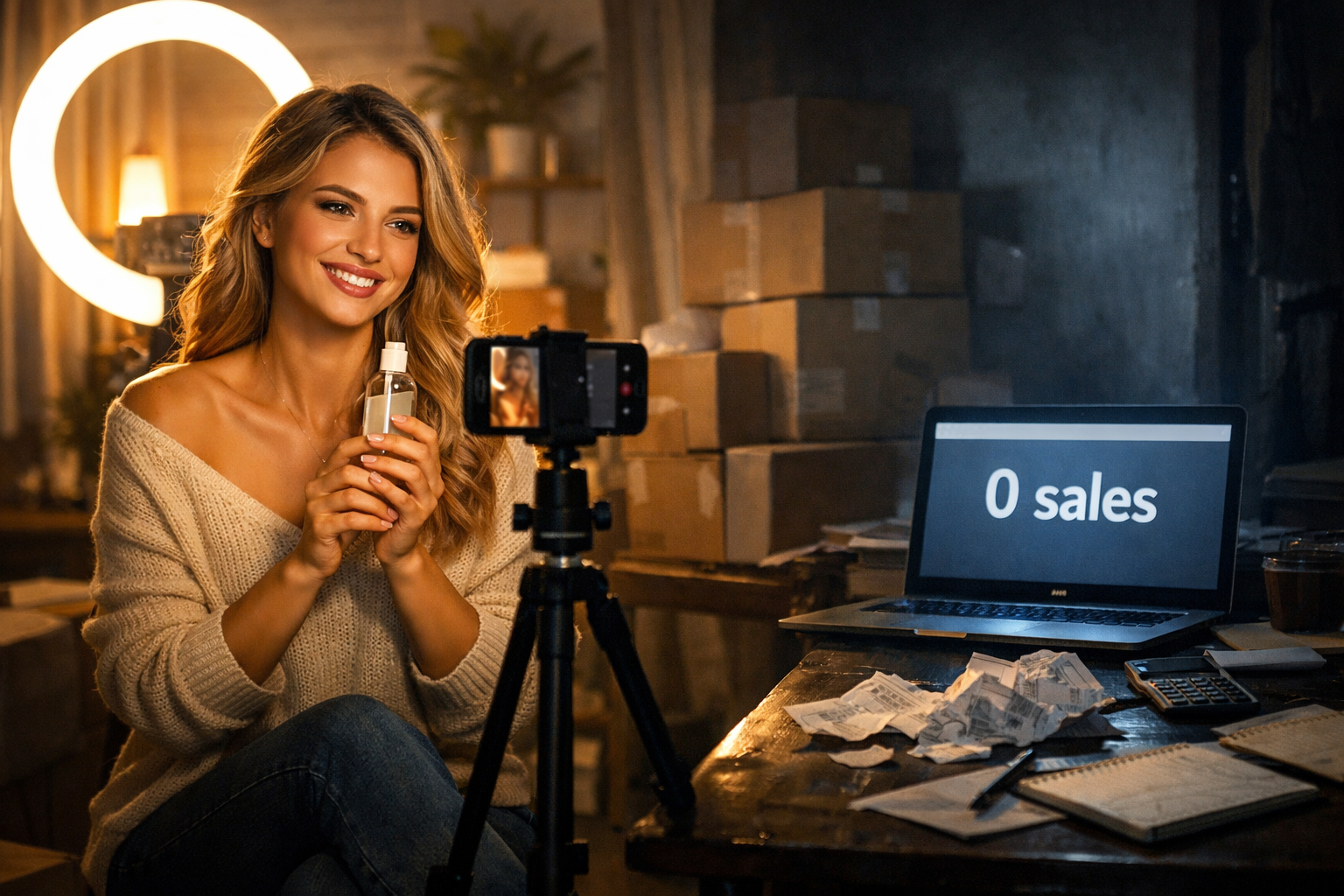
There is a conversation happening right now in Kenyan business and marketing circles. Entrepreneurs are frustrated. They paid an influencer-sometimes a lot of money, posted the content, watched the views roll in, and then. nothing. The phone did not ring. The sales did not come. The numbers looked good on paper and felt empty in the bank account.
So the question being asked is: do influencers actually work?
It is the right question. But it is pointing at the wrong problem.
Influencers do not fail because they are the wrong tool. They fail because people are using them as the entire toolbox.
What follows is an honest breakdown of how digital marketing actually works-what influencer campaigns can and cannot do, what you are leaving on the table if you ignore SEO, why your About page might be the most underrated asset in your entire business, how retargeting works and why it matters more than any single campaign, and the invisible rules of Facebook that no one tells you until it is too late.
This is the long game. And it's the only game worth playing.
1. Influencers Are a Spark, Not a Fire
Let us start by being fair to influencers, because the conversation in Kenya has swung to a place that isn't quite accurate either. Influencer marketing does work. But it works in a specific way, for a specific purpose, as part of a specific system.
What an influencer actually does is introduce your brand to a cold audience that trusts the person delivering the introduction. That's valuable. That trust earned by the influencer over months and years of content is borrowed by you for the duration of the post. If the product is right, the audience is right, and the timing is right, that introduction can generate real sales.
But here's what it cannot do:
• It cannot build long-term brand recognition on its own. When the post disappears from the feed in 24 hours, 48 hours, a week your brand disappears with it.
• It cannot help people who are searching for you find you. No one types an influencer's caption into Google.
• It cannot explain the depth of your product in the 8 seconds someone spends on a Reel before scrolling past.
• It cannot build the emotional trust that turns a one-time buyer into a loyal customer.
An influencer campaign is a spark. It can generate heat in the moment. But a spark with no fuel — no SEO, no website, no story, no retargeting — goes out.
The businesses who feel burned by influencer marketing typically made one of two mistakes: they used influencers as a replacement for brand-building, or they sent the traffic somewhere that couldn't convert it a weak website, no About page, no story, no follow-up.
The right way to use influencers:
→ Short-term: Use influencers to introduce your brand to new audiences and drive traffic to your website
→ But first: Make sure there is a website worth arriving at. An About page that earns trust. A product description that converts. A reason to come back.
→ Then: Retarget the traffic the influencer sent you. The influencer's job is the first introduction. Your job is the follow-up.
2. SEO Is Not Optional; It's the Foundation
While you're paying for an influencer post that lasts 48 hours, someone else is quietly writing a blog post that will rank on Google for five years.
That's not an exaggeration. A well-written, keyword-optimised piece of content on your website can continue bringing in new customers every single day — without spending a shilling after you publish it. That's the compounding nature of SEO, and it's why every serious business, regardless of size, needs to invest in it.
Let's make this concrete with coffee, because it illustrates the point perfectly.
The coffee example
Imagine you sell specialty coffee beans. Someone in Nairobi wakes up on a Sunday morning and types one of these into Google:
"best Ethiopian coffee beans Kenya"
"where to buy specialty coffee beans online"
"single origin African coffee what does it mean"
"best coffee for cold brew at home"
If you have blog posts on your website that answer these questions, written with the right keywords, the right structure, and genuine useful information, your brand shows up. Not because you paid for an ad. Not because an influencer mentioned you. Because you put the answer where the question was being asked.
Now compare that to Instagram. That same person doesn't go to Instagram to research which coffee beans to buy. They go to Instagram to be entertained. They might see an influencer's post about your coffee, enjoy it, even, and then scroll to the next thing. The purchase happens later, after they've thought about it. And if your brand isn't where they go to think which is Google you lose the sale to whoever is.
Social media is where people discover. Search is where they decide. You need to be present at both, but only one of them lasts.
The AI angle; and why this matters more now than ever
Here's something that most businesses haven't thought about yet. When someone asks ChatGPT, Gemini, or any AI assistant a question- 'What's the best specialty coffee to buy?'-where does that AI get its answer?
Not from TikTok. Not from Instagram. Not from a Reel that got 40,000 views last month. AI tools pull from indexed web content, websites, blog posts, product pages, reviews. Content that lives on the open web and has been crawled by search engines.
Which means if you've invested in SEO, if you have a well-written blog post about Ethiopian coffee beans, a product description that uses the right keywords, an About page that clearly explains what you do, your brand has a chance of appearing in AI-generated answers. If all your content lives inside the walls of Instagram or TikTok, AI can't see it, and neither can the people asking AI for recommendations.
The uncomfortable truth about social media content:
Every post you make on Instagram, TikTok, Facebook, every caption, every video, every Reel- disappears from the algorithm within days. It is invisible to Google. It is invisible to AI. It does not compound. It does not build. It exists for the moment, and then it's gone.
Every post you make on your own website, properly written, properly structured, can be found tomorrow, next month, next year. It is yours. The algorithm cannot take it from you.
This doesn't mean stop posting on social. It means stop treating social as your primary channel and start treating your website as your home base.
3. Your About Page Is Your Most Underrated Asset
Ask yourself honestly: when did you last update your About page?
For most businesses, the About page was written once probably when the website was first built, and has never been touched since. It says something generic about the company's mission, lists the founding year, maybe has a photo, and gets ignored.
That's a massive missed opportunity. Because your About page is the single most important page on your entire website for one reason: it's where trust is built.
Why people visit the About page
Think about your own behaviour as a customer. When you find a new brand, maybe through an Instagram post, maybe through a Google search, maybe through a friend's recommendation, what do you do before you buy?
You check them out. You go to their website. And if something about the product interests you, you almost certainly visit the About page. You want to know: who is behind this? Why did they build this? Can I trust them?
The About page is your answer to those questions. And if your answer is weak, if it's corporate language and generic claims and a list of features, you lose the sale. Not because the product is bad, but because the connection wasn't made.
People don't buy products. They buy from people they trust, solving problems they recognise.
What a great About page actually does
A great About page does three things:
• It explains the problem you solve; not the product you sell. Nobody wakes up wanting to buy specialty coffee beans. They wake up wanting a morning ritual that feels good. They wake up frustrated that their office coffee is terrible. They wake up wanting to know that their purchase does something meaningful in the world. Your About page should speak to that — before it ever mentions the product.
• It tells the founder's story; honestly and specifically. Not 'we are passionate about quality.' That means nothing. Something real: why you started, what problem you personally experienced, what made you believe a better version existed. Specificity creates trust. Generality creates distance.
• It connects the product to a larger purpose; especially in 2026, when consumers are increasingly choosing brands whose values align with their own. If your coffee is Living Wage Verified, if it's sourced from farmers paid fairly in Uganda and Ethiopia and the DRC, that's not a feature. That's a reason to believe in you. It goes on the About page, front and centre.
The About page as the emotional bridge
Every great brand has an emotional bridge between the product and the person. Apple's bridge is simplicity and creativity. Patagonia's is environmental responsibility. Joro Coffee's is the idea that something as ordinary as your morning cup can be an act of justice for the farmer who grew it.
That bridge is what makes people loyal. Not the product quality alone, plenty of brands have good products. The bridge is why someone chooses you, stays with you, tells their friends about you, and feels good about spending money with you.
If your About page doesn't build that bridge, influencers can drive all the traffic in the world to your website and it won't convert. The traffic arrives, looks around, finds nothing to connect to, and leaves.
About page checklist:
→ Does it open with a problem, not a product feature?
→ Does it tell a specific founder story — not a generic mission statement?
→ Does it explain the 'why' behind the business in a way that resonates emotionally?
→ Does it connect the product to something larger — a purpose, a community, a change in the world?
→ Does it use real language — the way a human speaks, not the way a press release reads?
→ Does it make someone feel something by the time they finish reading it?
4. The Rule of Four: Why Retargeting Is Non-Negotiable
Here is a truth that most businesses refuse to accept because it's inconvenient: most people will not buy from you the first time they encounter your brand.
Not because they don't want what you're selling. Not because your product isn't good. Because that's simply not how human purchasing decisions work. Research consistently shows that it takes multiple touchpoints, often four, five, six or more before a cold audience member becomes a paying customer.
Think about it from your own experience. You see a brand for the first time on Instagram. You think: interesting. You scroll past. A few days later you see them again. You think: I've heard of them. A week later a friend mentions them. You think: maybe I should look into this. You go to their website. You think about it. And then, maybe, you buy.
That journey took weeks and multiple exposures. And the business that won your purchase wasn't the one that posted the best single piece of content. It was the one that stayed visible throughout the journey.
What retargeting actually is
Retargeting is the technical system that makes this happen at scale. When someone visits your website or clicks your ad, or engages with your content, a small piece of code (called a pixel) records that interaction. Then, for the next several days or weeks, your ads follow that person around the internet.
This is not accidental. This is the most efficient form of advertising that exists, because you are not spending money on people who have never heard of you. You are spending money on people who have already raised their hand, who have already shown interest, and gently reminding them that you exist.
The retargeting journey; what it looks like:
→ Day 1: Someone sees your influencer post or finds your website through Google. They look around. They leave.
→ Day 3: They see your retargeting ad. They remember you. They might click back to read your About page.
→ Day 7: They see another retargeting ad — this time featuring a specific product with a customer review. They click.
→ Day 10: They see a final retargeting ad with a gentle offer — free shipping, or a first-order discount. They buy.
This is the system. The influencer or blog post opens the door. Retargeting keeps the door from closing.
Without retargeting, every person who visits your website and leaves without buying is lost forever. You paid to bring them there , through your influencer budget, your time writing blog posts, your ad spend, and then let them walk away. Retargeting is what captures that investment.
The cold audience is expensive to acquire. Retargeting is how you make them warm enough to buy — without starting from scratch every time.
5. The Facebook Rules Nobody Tells You (Until It's Too Late)
Facebook and Instagram's advertising platforms are among the most powerful customer acquisition tools available to small businesses. They are also full of invisible rules that punish you for breaking them even when you didn't know they existed.
Here are the ones that matter most:
Links kill organic reach
This is the most important rule and the least understood. When you post on your Facebook page or personal profile and include a link-to your website, your product page, your blog post, Facebook's algorithm actively suppresses that post.
Why? Because Facebook's business model depends on people staying inside Facebook. Every time someone clicks a link and leaves, Facebook loses. So Facebook penalises posts that try to take people away.
The result: a post with a link might reach 200 people organically. The same post without a link might reach 2,000.
What to do instead:
→ Post the content natively — put the story, the caption, the value inside the post itself. No link.
→ Put the link in the first comment — comment on your own post immediately after publishing with the link. People who want it will find it. The algorithm won't punish you.
→ Or use Stories for links — Instagram and Facebook Stories allow links without the same algorithmic penalty.
Video holds attention — text loses it
Facebook and Instagram's algorithms reward content that keeps people on the platform. Video- particularly short video that plays automatically and hooks within the first 3 seconds-gets dramatically more organic reach than text or image posts.
If you are posting only images and captions, you are working against the algorithm. Video doesn't have to be produced. A 30-second phone video of you explaining your product, your sourcing, your story-with subtitles, because most people watch without sound-will outperform a polished static image almost every time.
Engagement in the first hour determines everything
When you post on Facebook or Instagram, the algorithm shows your content to a small slice of your audience first-maybe 5-10%. If those people engage (comment, share, react), the algorithm shows it to more. If they don't, it stops.
This means the first hour after posting is critical. Ask a question in your caption to prompt comments. Respond to every comment within the first hour. Ask your team or community to engage immediately after posting. The algorithm reads early engagement as a signal of quality and rewards it with broader reach.
Paid and organic are separate games
Your organic posts and your paid ads operate on completely different systems. A post that performs well organically does not automatically make a good ad and vice versa. When you 'boost' a post, you are essentially converting it into an ad. But boosting is the least sophisticated form of paid advertising on Facebook, it gives you very limited targeting and usually poor return.
Running proper Facebook Ads through Ads Manager, not the Boost button gives you control over who sees your content, when, in what format, and with what objective. The Boost button is for people who want to feel like they're doing advertising. Ads Manager is for people who want results.
Facebook: what works vs what doesn't
✗ Links in posts — suppressed by algorithm
✓ Links in first comment — no penalty
✗ Boosting posts — expensive, limited targeting
✓ Facebook Ads Manager — full control, proper targeting
✗ Image-only posts — lower reach than video
✓ Native video with subtitles — maximum organic reach
✗ Posting and disappearing — kills engagement signals
✓ Engage in the first hour — tells the algorithm your post is worth spreading
Putting It All Together: The System That Actually Builds a Business
The conversation in Kenya about influencers is the right conversation, but it needs to be a bigger conversation. The question isn't 'do influencers work?' The question is: 'do you have a system that works?'
A system looks like this:
• Your website is your home base — not Instagram, not TikTok. Your website is the only digital asset you fully own and control. Everything else should point back to it.
• Your blog is your long-term SEO engine — publishing consistent, keyword-rich content that answers the questions your customers are already searching for. Compounding returns, every day, for years.
• Your About page is your trust-builder — the emotional bridge between your product and your customer. It explains the problem you solve, the people behind the brand, and the reason to believe in you.
• Influencers are your introduction mechanism — used strategically to get your brand in front of new audiences. Not the whole strategy. The opening move.
• Retargeting is your conversion engine — capturing the interest generated by influencers and blog posts and ads, and nurturing it until a purchase happens. The rule of four applies: be willing to show up four times before expecting a sale.
• Social media is your relationship channel — for community, for conversation, for humanising the brand. Know its rules, work with the algorithm, never put a link where it will be penalised.
Every business that succeeds online builds a system. Every business that fails online runs campaigns.
The businesses frustrated with influencer results are running campaigns. The businesses quietly growing are building systems.
Which one are you building?
Additional Note
I work with brands and business owners who are tired of running campaigns and ready to build a system. Whether you're trying to figure out your SEO strategy, rewrite your About page so it actually connects, structure a retargeting campaign, or simply understand where your marketing spend is going, I can help you think it through. Reach out