He Came to Alabama From Lagos at 18 to Escape Violence. Twenty Years Later He Sold His Company for $1.25 Billion.
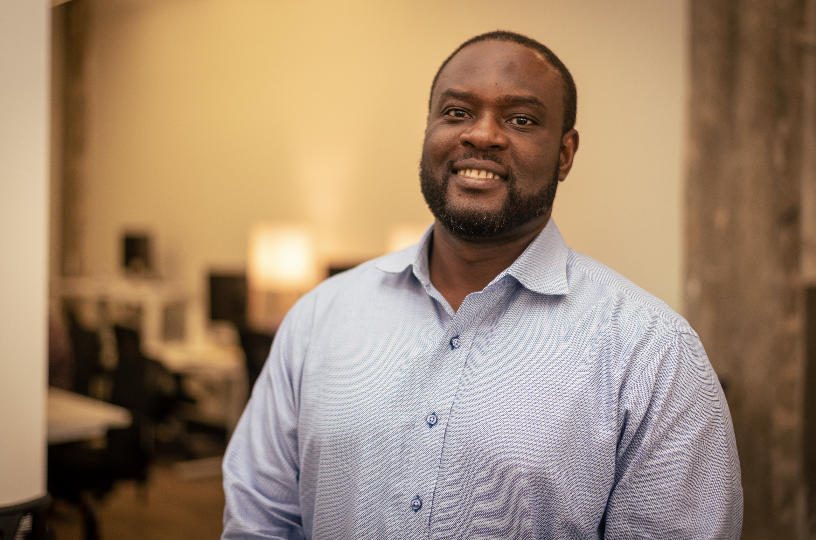
Shegun Otulana was eighteen years old when he left Nigeria.
He has said he left to escape violence - the kind that had become ambient in Lagos, the kind that surrounded you without asking permission. His brother had already made the move to Birmingham, Alabama. Shegun followed. The University of Alabama at Birmingham was accepting him. Engineering and Management Information Systems. He packed what he could and went.
Birmingham, Alabama. Not New York. Not Los Angeles. Not the cities people imagine when they think about immigrant success stories in America. Birmingham - a city still carrying its own complicated history, a place most people were trying to leave rather than arrive in.
Shegun arrived and decided to stay.
He paid his way through university with help from his parents, credit cards, paid internships, and side work. He graduated in 2004. That same year, with almost nothing, he registered his first company - Zertis - a software consulting business that built custom solutions for small businesses. Attorneys. Home health operators. Lumber companies. Anyone who needed something built and could not afford to hire a big firm.
It was modest. It was real. It kept the lights on while he figured out what he actually wanted to build.
The answer came from a therapist.
A local mental health professional came to him for help. She needed software to manage her practice - scheduling, billing, notes, compliance. She could not afford a custom build. He went looking for something she could buy off the shelf.
He could not find anything that worked.
He looked harder. He searched the market. He started asking around. And what he found was a gap so wide and so ignored that he could not believe no one had filled it. Mental health providers - therapists, counselors, behavioral health practices across America - were running their businesses on systems that did not fit them. The paperwork was brutal. The billing was a nightmare. Nobody had built something specifically for them.
"That research really opened my eyes to the market and the potential opportunity," he said.
In August 2013, he stepped down from Zertis and started TheraNest.
He did not raise a lot of money. He has said this clearly and repeatedly because it matters: he built a profitable company on discipline and focus rather than on other people's capital.
"We became very profitable very fast," he said. "We did not raise a lot of money. My company was very capital efficient and built a company that became profitable within its second year."
His wife Mary encouraged him through all of it. He has credited her directly - she was the one who pushed him to bet on himself, who told him to use their savings, who held the weight of the decision alongside him.
TheraNest grew into Therapy Brands. It served 28,000 practices nationwide. It became the leading software platform for mental and behavioral health providers in America - the people who help the people that everyone else is too busy to help.
In May 2021, KKR - one of the world's largest investment firms - acquired Therapy Brands for $1.25 billion.
The largest software exit in Alabama history.
He did not take the money and leave.
He started Harmony Venture Labs - a company dedicated to building the next generation of businesses in Birmingham. His stated goal: ten companies in ten years. He wants to build the startup ecosystem in the city that received him when he arrived from Lagos at eighteen with nothing but ambition and a brother who had gone first.
"We don't run from where we have ties," he has said. "We build on them. We put a stake in the ground and say: for however long I'm here, I have an obligation to this place and its people."
His parents were not educated. They hustled - renting property, owning gas stations, doing what they could. He watched that and absorbed it. He has said he had no interest in their specific businesses. But the pattern stayed with him - the willingness to build something from the ground rather than wait for someone to hand it to you.
He escaped violence in Lagos at eighteen. He chose Birmingham. He built a billion-dollar company for the people America's mental health system was failing.
Then he stayed to build more.
May the day break!